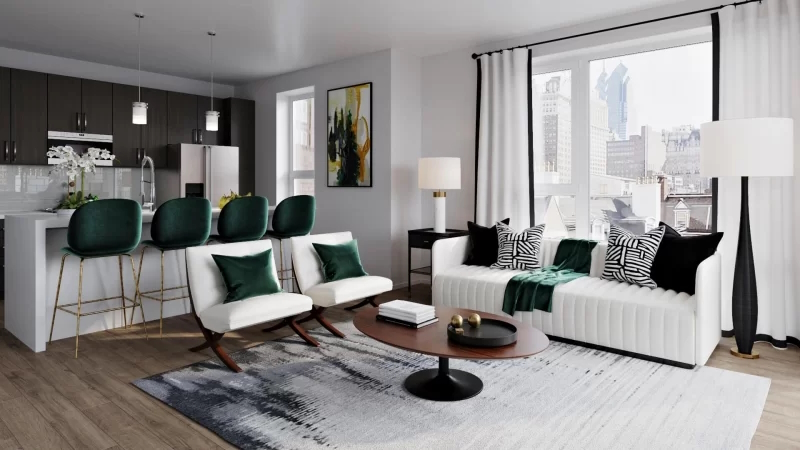
3ds Max is not something a real estate agent should have to think about. It is Autodesk software, it costs more per year than plenty of agents spend on marketing, and nobody is suggesting you learn it.

You hear the name anyway, because it sits behind a lot of the staging photos you order. And the choice your vendor makes between that program and Photoshop decides what you can ask for later, how the shadows land in the picture, and whether a second angle of the same room costs you anything.
Table of Contents
- What 3ds Max Is, And Why A Realtor Ever Hears About It
- The Real Difference: 3D Models Or Cut-Out Photos
- What The Model Buys You In A Listing
- Where Photoshop Is Still The Better Tool
- How To Tell Which One Your Vendor Used
- The Cheap Offer Problem
- What To Ask Before You Order
- 3ds Max Virtual Staging FAQ
What 3ds Max Is, And Why A Realtor Ever Hears About It
It is 3D modeling and rendering software from Autodesk, the same company behind AutoCAD. Architectural visualization studios lean on it heavily, and staging is really just archviz pointed at a smaller room, which is how the name ended up in real estate.
One detail worth knowing, because a lot of older articles get it wrong: 3ds Max runs on Windows only. There has never been a Mac version. If somebody tells you they stage in 3ds Max on a MacBook, something in that sentence is off.
The renderer that ships with it is Arnold, though most studios doing interiors reach for V-Ray or Corona instead. That part genuinely does not concern you. What matters is what the tool lets the artist do with your photo.
The Real Difference: 3D Models Or Cut-Out Photos
Photoshop staging works with photographs of furniture. Somebody finds a sofa on a stock site, cuts it out, drops it into your room photo, scales it until it looks about right, then paints in a shadow by hand.
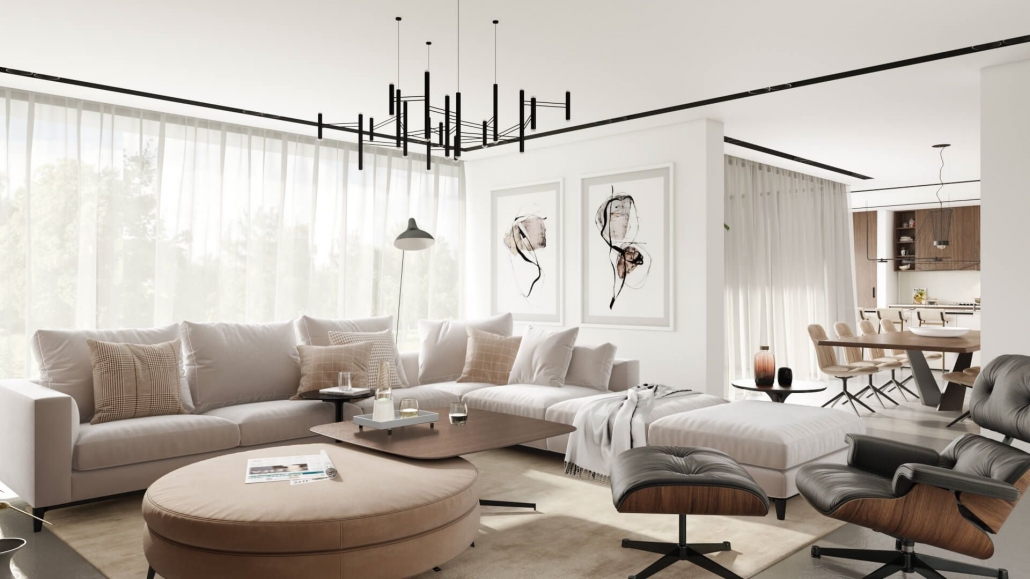
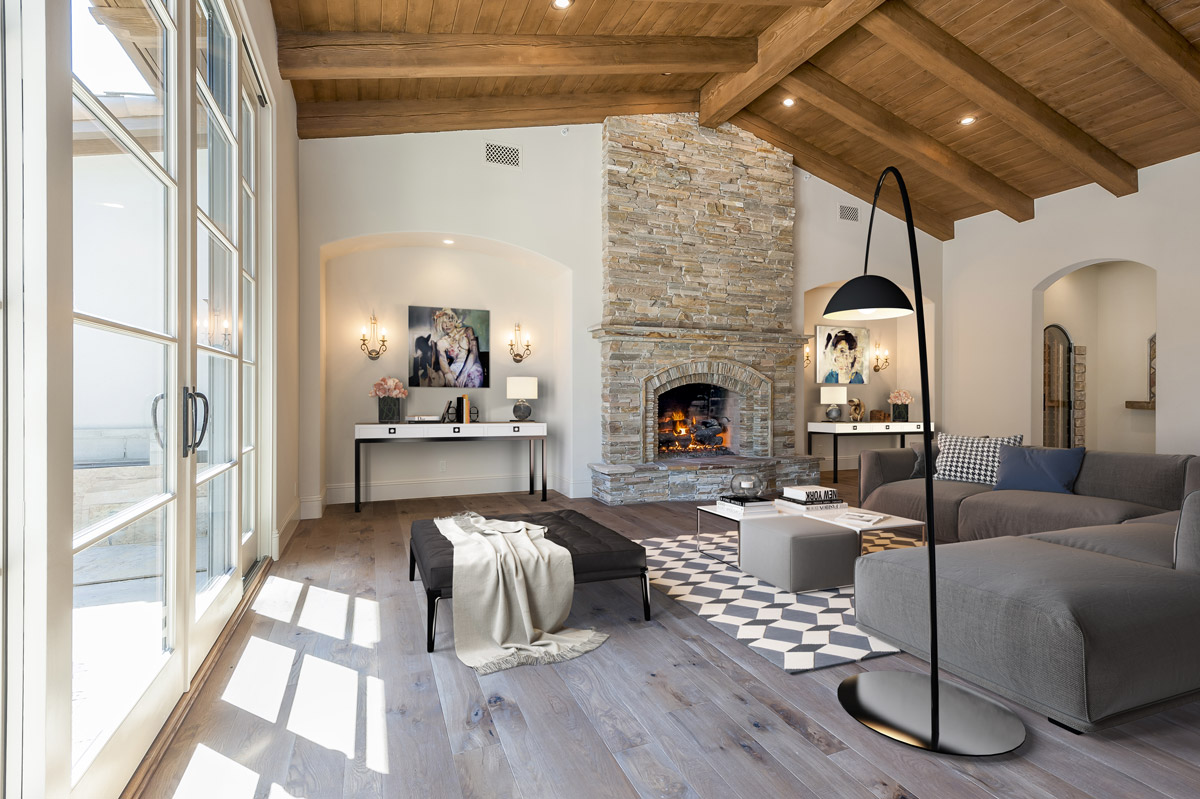
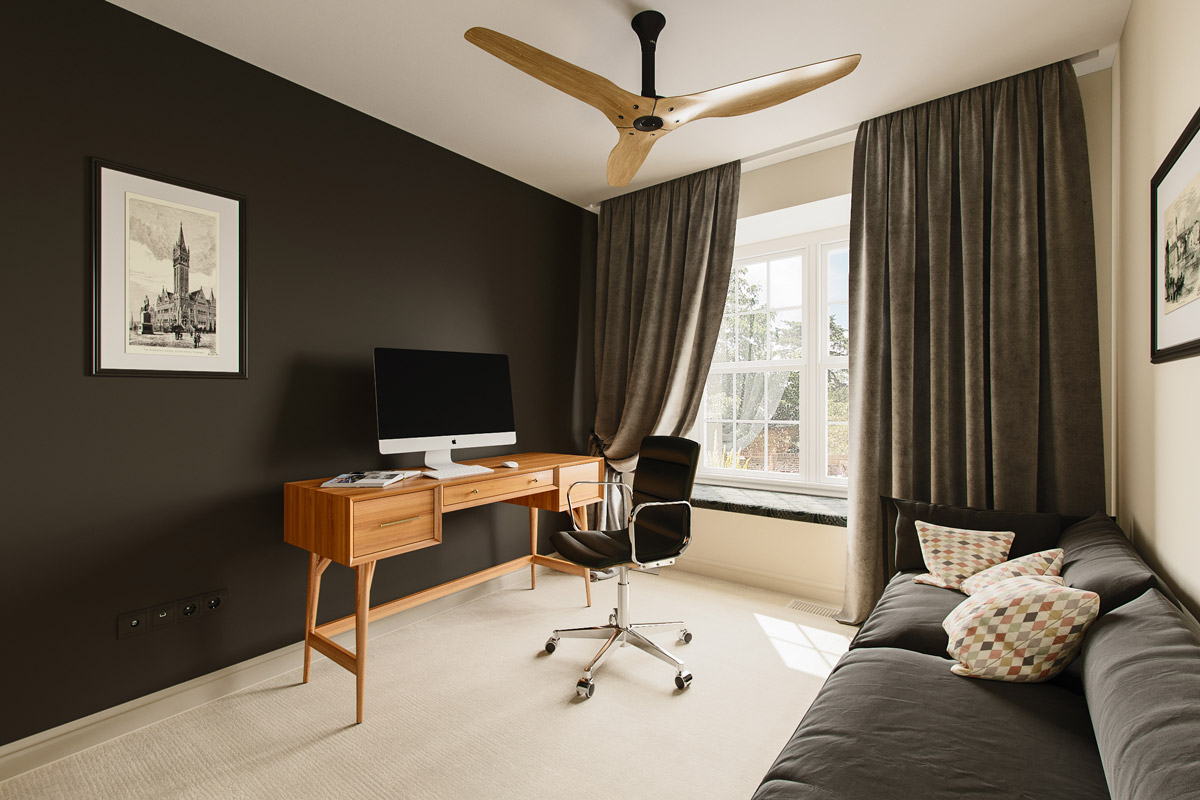
3ds Max staging works with 3D models. The artist rebuilds your room as geometry, places modeled furniture inside it, puts a light source where your window is, and lets the software work out where every shadow falls.
That is the entire difference. Everything below comes out of it.
What The Model Buys You In A Listing
Shadows that agree with the window. When the light is calculated rather than painted, the sofa throws its shadow in the same direction as the coffee table and the lamp. Buyers do not consciously check this. They just feel that something is wrong when it is wrong.

A second angle without starting over. The room exists as a model, so the artist moves the camera and renders again. In Photoshop there is no room, only one flat picture, and a different angle means finding every piece of furniture again shot from that exact viewpoint. Usually it means the answer is no.
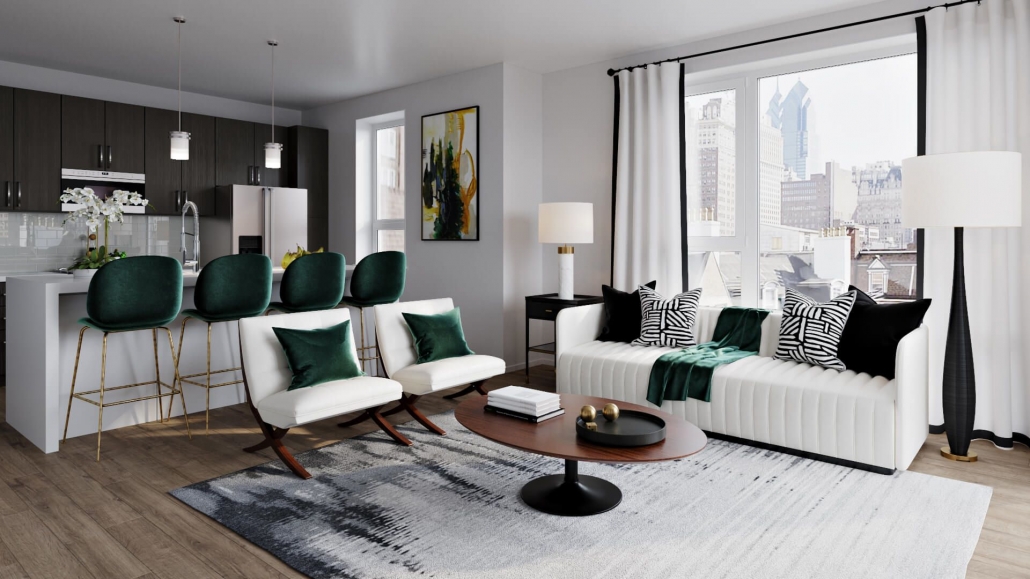
Proportions you can defend. Furniture models carry real dimensions. A sofa that is 84 inches wide stays 84 inches wide against your walls, so the photo does not quietly oversell how much floor you have.

Tours, video and sliders from the same scene. Once the room is built, a 360 tour or a walkthrough clip is extra render time rather than a separate project. Here is one rendered from a staging scene, so you can see what a buyer gets to click through.
Revisions that cost an afternoon. Swap the grey sectional for leather, change the rug, drop in a nursery instead of an office. The scene is already there.
-
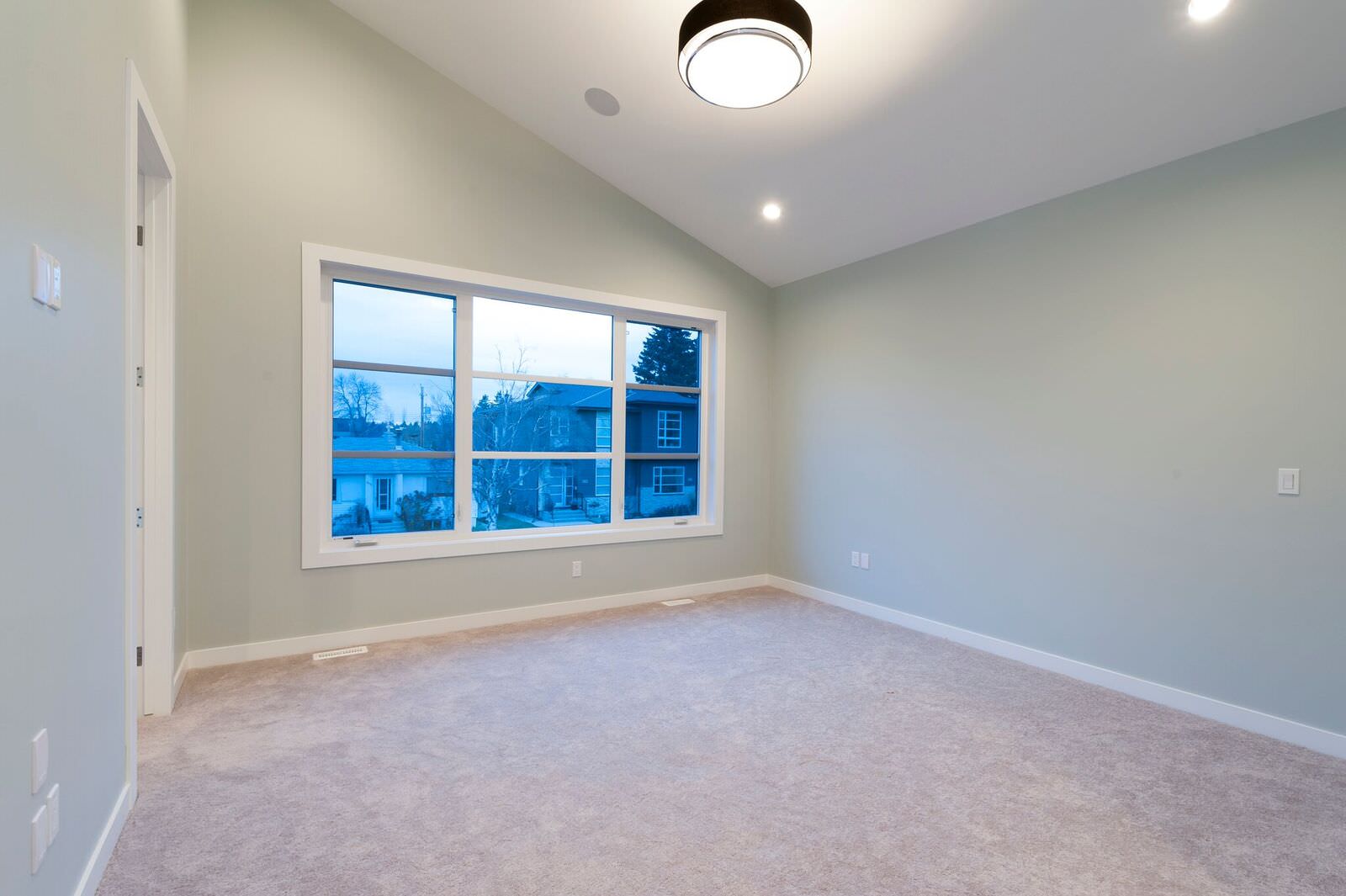
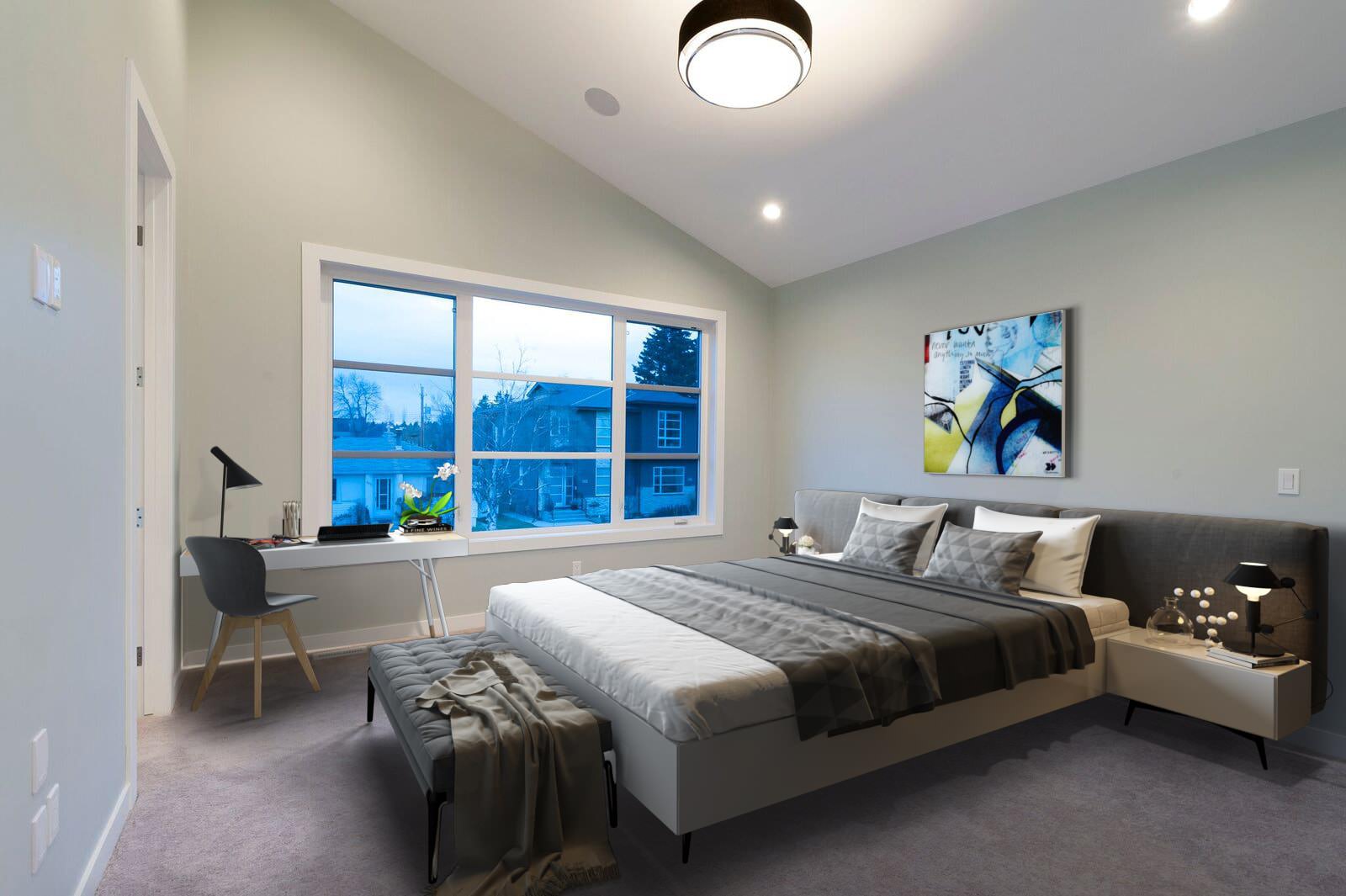
Before Virtual Renovation After
Where Photoshop Is Still The Better Tool
Photoshop is not the loser here, it is a different job. When something has to come out of the photo rather than go into it, Photoshop is the right tool and 3D artists use it constantly.
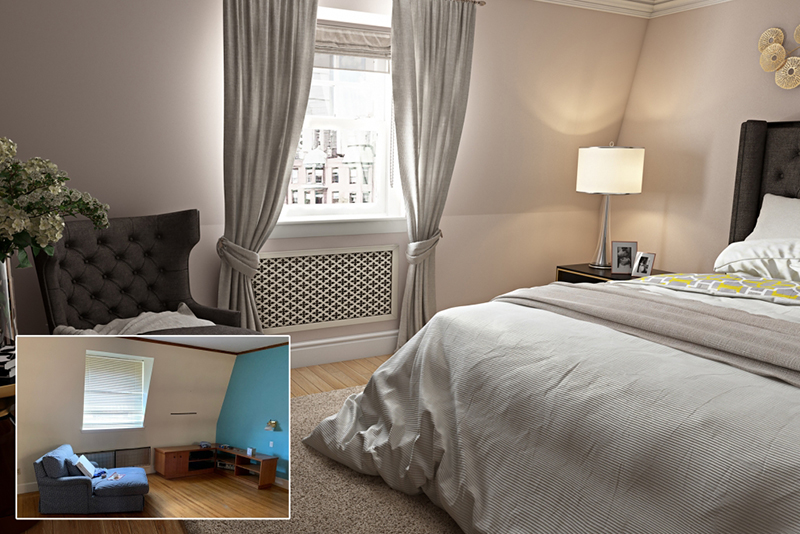
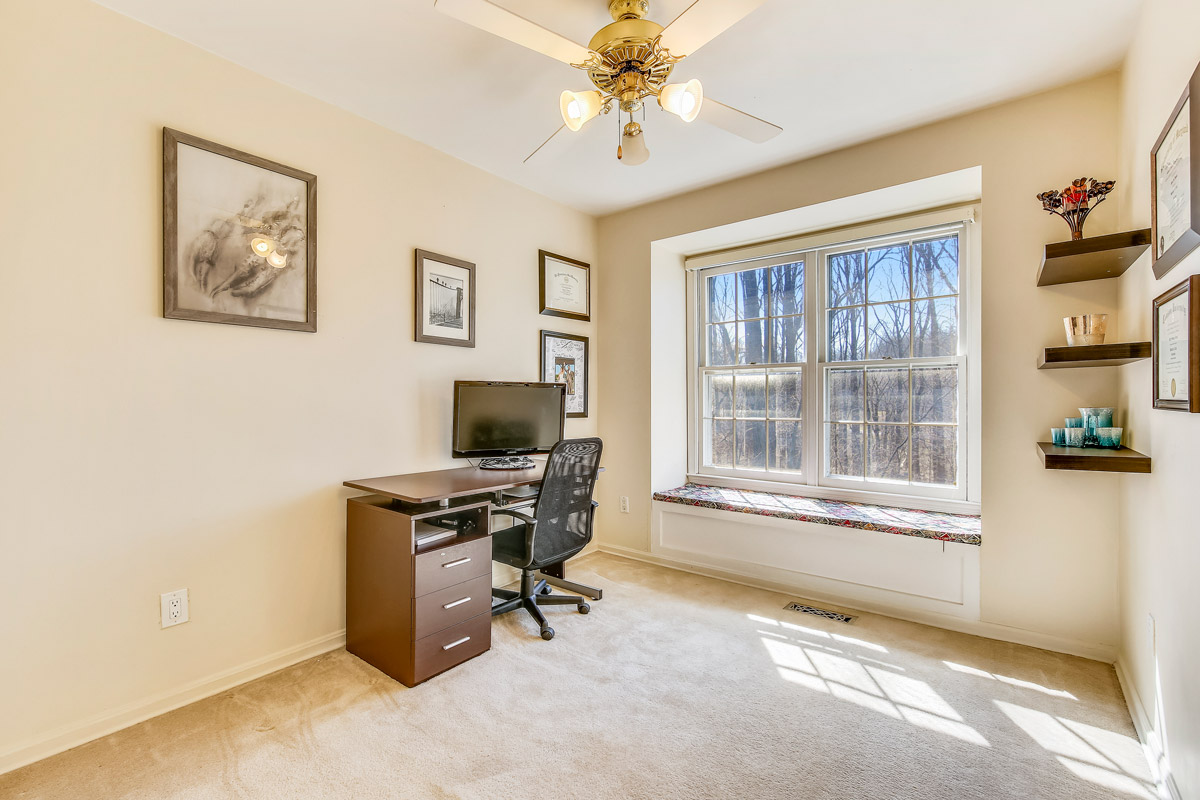
Removing a stain, a crack, a stray cable. Clearing a cluttered room so it can be staged from scratch. Changing a wall color, fixing a blown-out window, cleaning up the yard. Most staging jobs on a furnished property start in Photoshop and only then move into 3D. If you are weighing the two methods for a specific listing rather than for your whole pipeline, the case by case breakdown lives in virtual staging vs Photoshop.
How To Tell Which One Your Vendor Used
Ask for a second angle of a room they already staged. A studio working in 3D will send it. A cut-out job cannot produce one without redoing everything.
Look through their portfolio for the same sofa. Stock furniture photos are a limited pool, and the same three sofas turn up across a dozen listings when someone is working from cut-outs.
Check where the shadows point. Pick any staged photo and follow the shadow of every object back toward the light. If two of them disagree, that shadow was painted.
Look at the glass. Reflections in windows, mirrors and glossy tabletops are the hardest thing to fake by hand, so they are usually just missing.
The Cheap Offer Problem
Photoshop staging is cheap to attempt. The software is common, the machine does not need to be powerful, and basic skill is easy to claim. That combination produces a steady supply of very low quotes.

Two things happen with those. The images come back flat and slightly off, which is worse for a listing than an honest empty room. Or the portfolio you were shown was never theirs, and you find out after paying.
The fix is not paying more for its own sake. It is asking for one thing before you order.
What To Ask Before You Order
Send the actual photos of the room and ask what they would do with it. A real studio answers with specifics: this window is blowing out, this angle hides the corner, we would need a shot from the doorway.
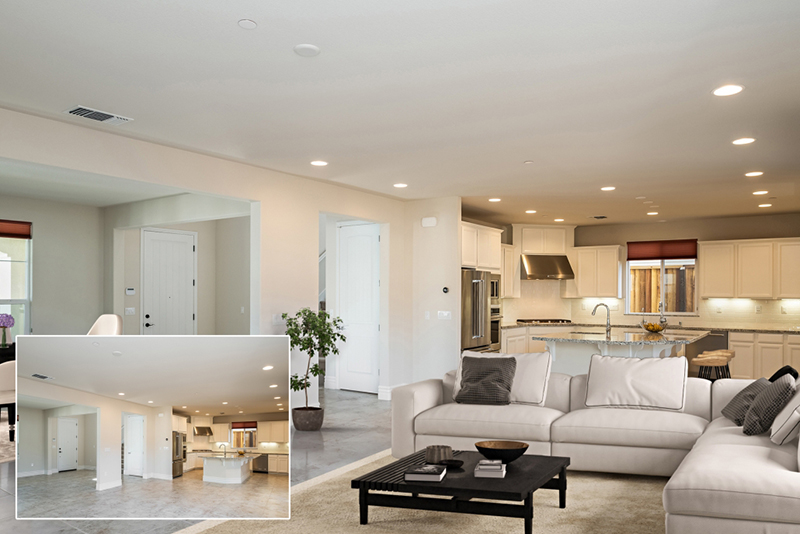
Ask what happens if you want a change after delivery, and how many rounds are included. Ask whether they can give you a 360 tour of the same room later. Ask them to send the original photo next to the staged one.
None of these questions require you to know anything about 3ds Max. They just separate the studios that built your room from the ones that pasted furniture onto it.
The software is the vendor’s problem, not yours. What reaches your listing is either a room that was rebuilt or a photo that was pasted on, and the difference shows up the moment you need something more than the one image you were sent.
Got an empty listing and no idea which you have been buying? Send us the photos and we will show you the room furnished. Our virtual staging services start there.
3ds Max Virtual Staging FAQ
Is 3ds Max virtual staging better than Photoshop?
For furnishing an empty room, yes. The furniture is a 3D model in a rebuilt room, so the lighting is calculated instead of painted and you can get a second angle later. For pulling something out of a photo, Photoshop is the better tool and studios use both on the same job.
Does 3ds Max run on Mac?
No. It is Windows only and always has been. Studios on Apple hardware either run Windows on a separate machine or work in different software.
Do I need to know 3ds Max to order virtual staging?
Not at all. You send photos and a note about the style and the buyer you are aiming at. The software matters only because it decides what you can ask for after delivery.
Can 3ds Max staging remove furniture that is already in the room?
Yes, though the removal step usually happens in Photoshop first. The old furniture is cleared, whatever it was covering gets reconstructed, and the empty room is then staged in 3D. It costs a little more than staging a genuinely vacant space.