

Print marketing still plays an important role in on ground or guerrilla marketing campaign. Moreover, it is more effective for small real estate businesses with a focus on a local reach. It generates local brand awareness and leads clients directly to its premises.
Digital ads disappear the second someone scrolls past. A fridge magnet with your number on it sits in a kitchen for years. That is the whole case for promotional items, and it is why agents working a specific neighborhood still order them by the box.
The trick is picking things people keep. Below are the print pieces and branded products that actually earn their spot in a local campaign, plus what to put on them so they do not go straight in the bin. For the digital side of the picture, see the wider marketing toolkit.
Table of Contents
#1. Brochures
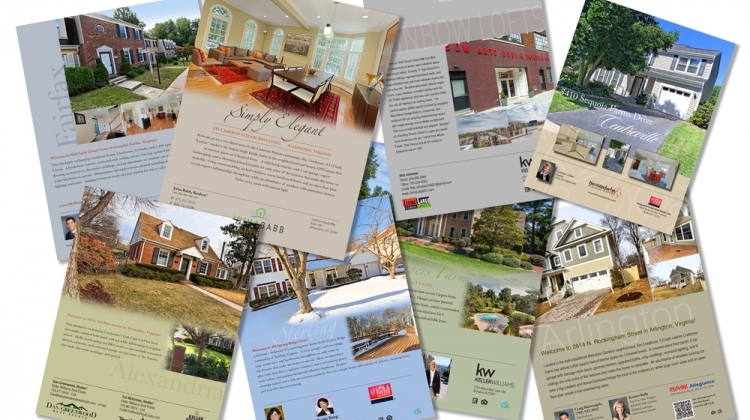
This kind of real estate promotional items have been a staple in the business for years and still are underway. They are tried and tested. People know what to expect. Brochures lend agencies authenticity and trustworthiness. They are quick and easy to create. Brochures provide potential clients with that sufficient data about the agency or persona to make a sound decision to collab. This is where the information should be given straight to the point and demonstrate the business generally.
#2. Business Сards

These real estate promotional items around and used in networking since the 17th century. They are still a powerful brand tool for realtors. They work ideally for encouraging referrals and word-of-mouth. It’s not a secret that successful realtors close more deals through referrals from previous clients. A referral is most assessed by a new buyer or seller. Thus, new clients feel more confident when partnering up with a real estate agent recommended by a friend, family member, or a colleague.
#3. Outdoor Advertising Objects

Ideal as real estate promotional items are outdoor advertising objects, such as billboards, city lights, scrolls, guerrilla and transit advertising, and so on. To create them, high-resolution print images are required. What’s interesting, it’s exactly 3D home staging that can handle such tasks. Not only does it allow any kind of visual content, but it also comes in any format and resolution, thanks to full-stack rendering capacities. So, it is a double win for two reasons: first, realtors can apply any visual and, second, expect it to be high-quality.
#4. Banners

At some point, real estate business needs such real estate promotional items as banners. The latter might come in handy for trade shows, agency’s events, and so on. Luckily, nowadays different advancements in printing methods like variable data printing significantly decrease costs. Besides, banners are reusable and eye-catching. Nowadays, the most progressive agencies use computer-generated images for that.
The technology allows staging living spaces virtually like adding furnishings and creating real-life designs and applying them to any print promo item. Why is it pivotal? This way, banners become specific message carriers to appeal to a certain target audience at the event or demographics in the neighborhood.
#5. Postcards, Leaflets For Mailing
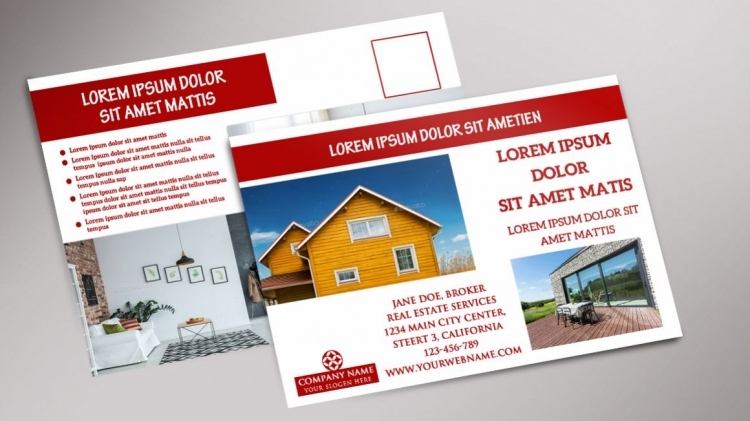
Sending out postcards or leaflets within a new promotional campaign is an excellent way to inform people of new opportunities. If the tactile quality of these real estate promotional items taps into people’s ‘haptic (touch) memory’, they build an emotional connection with them. People are more likely to take time to read through it. High-quality print especially makes sense for luxury real estate newsletters.
Be the way, this kind of material can be also enhanced with cg imagery and virtual staging. Again, if realtors know well their target audience, they can include particular virtually staged interior scenes to build more meaningful connections with the readers ‘from the first sight’.
Print marketing is still mainstream in the industry. Elaborate real estate promotional items make it stand out and even outshine some digital strategies. However, virtual staging and cg imagery, in general, play a crucial role here as well. They make a marketing campaign personal, memorable, and tangible. CG images are as realistic as photos, yet require less time to be prepared, allows more creativity and customization, and, what’s more important, work with any format and platform. They are reusable and multipurpose. Together with a digital one, it constitutes a killer sale power for agencies.
Willing to use virtual staging services for your real estate promotional items? Pitch out team right now and get a quick glimpse into how to turn your promo materials into sales machines right now.
Printed materials work better with furnished interiors on them, and CG staging is the quickest way to get those shots.
#6. Branded Merchandise That People Keep
Branded merchandise is where most of the promotional budget goes, and where most of it gets wasted. Nobody keeps a cheap pen. They do keep a solid tote bag, a decent notebook, a magnet with a local sports schedule printed next to your logo, a bottle opener shaped like a house. The rule of thumb is simple: if you would not use it yourself, it ends up in a drawer.
#7. Closing Gifts
Closing gifts sit in a category of their own. This is the one item a client photographs and posts, so it earns referrals long after the deal. A cutting board with the address engraved, a good doormat, a framed photo of the house on handover day. Skip the branded mug here. The gift should feel personal, and your name on the card is enough advertising.
#8. The Photos You Print
One practical note on artwork. Whatever you print, the property photos on it need to look like the listing did online, which usually means the same staged images you used there. A brochure with an empty room next to a website full of furnished ones just confuses people who saw both. If the rooms were empty, virtual staging fixes that before anything goes to the printer.
Real Estate Promotional Items FAQ
What promotional items work best for real estate agents?
The boring ones, mostly. Magnets stay on fridges, tote bags get reused for groceries, notepads sit by the phone. All three keep your number in sight for months. Novelty items get a laugh and then a bin. If the budget is tight, pick one useful thing and order it properly rather than three cheap ones.
How much should an agent spend on promotional products?
Most agents working a neighborhood spend a few hundred dollars a year on this, not thousands. The number matters less than the split: something to hand out at open houses, something worth keeping for past clients, and enough left over to reprint when the phone number changes.
Do printed brochures still generate leads?
They do, but not the way a website does. Nobody googles their way to a brochure. It works when it is in someone hand at a viewing, or in a mailbox on a street where you already sold something. Treat print as a local reminder, not a lead generator, and it starts to make sense.
What should go on a real estate promotional item?
Your name, one number people can actually call, and a photo worth looking at. That last part is where most items fail. A grainy shot of an empty room does you no favors on glossy paper. Use the same staged photos from the listing so the piece matches what people saw online.







Leave a Reply
Want to join the discussion?Feel free to contribute!