Everything you need to know about virtual staging in real estate
Find out how virtual staging can help you impress buyers and make more lucrative deals
×


When it comes to creating marketing strategies for real estate, agents tend to follow a similar pattern. This includes conducting open houses, buying newspaper ads, updating online listings, sharing them on social media, sending out flyers, and of course, putting up the good old yard sign.

Listing photos of empty houses look depressing and unappealing, hence, realtors desperately need top-notch property images to attract prospects. Traditionally, to solve this problem, real estate agents order physical staging but for today’s reality this option is too expensive and time-consuming.

With advanced 3D technologies, real estate agents can stop using photos of empty rooms for listings or waste their money on expensive physical staging. Virtual services provide stunning CG imagery quickly and save the realtor’s budget at the same time.

Ten years ago, Virtual Reality (VR) and Augmented Reality (AR) were the stuff of science fiction movies, but not anymore. Today VR and AR are a part of the mainstream efforts to make life and work easier in different areas.
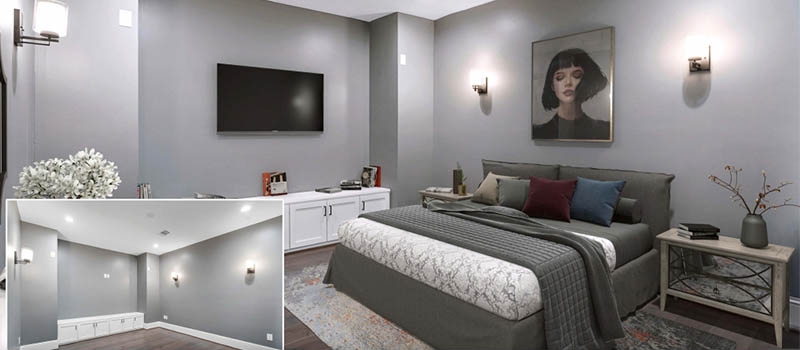
Realtors deal with different types of property, and one of them is as-is real estate. Sometimes, they face challenges to sell it because such homes look unattractive to potential buyers. The idea of turning to renovation contractors seems terrible.

Marketing for real estate agents is a sensitive process. When done right, it can be very rewarding and yield recurring clients. When done wrong, however, it can lead to recurring expired listings and loss of money and resources.
The internet has firmly established itself as the go-to place for property shoppers. After all, 99% and 90% of millennials and baby boomers respectively start their search for homes online. More so, according to 47% of realtors, the highest quality leads come from social media.

Spotting the target market allows companies to work out effective marketing strategies. Usually, it is defined by a group of individuals that have the same needs or qualities. These people are basically the end-users that tend to buy the company’s product. The real estate business is not any different.

Marketing strategies for real estate are probably the biggest challenge for the agency’s marketers. The reason is as simple as it is – the market is volatile and it’s not easy to grab the potential buyers’ attention in such a competitive environment.

Staging a house that’s up for sale has been a common practice amongst real estate agents for decades. Decluttering the living spaces, bringing in furniture, accessories, and plants can help buyers envision themselves living in the house.