Posts

3ds Max is not something a real estate agent should have to think about. It is Autodesk software, it costs more per year than plenty of agents spend on marketing, and nobody is suggesting you learn it.

3ds Max branding banner

You hear the name anyway, because it sits behind a lot of the staging photos you order. And the choice your vendor makes between that program and Photoshop decides what you can ask for later, how the shadows land in the picture, and whether a second angle of the same room costs you anything.

What 3ds Max Is, And Why A Realtor Ever Hears About It

It is 3D modeling and rendering software from Autodesk, the same company behind AutoCAD. Architectural visualization studios lean on it heavily, and staging is really just archviz pointed at a smaller room, which is how the name ended up in real estate.

One detail worth knowing, because a lot of older articles get it wrong: 3ds Max runs on Windows only. There has never been a Mac version. If somebody tells you they stage in 3ds Max on a MacBook, something in that sentence is off.

The renderer that ships with it is Arnold, though most studios doing interiors reach for V-Ray or Corona instead. That part genuinely does not concern you. What matters is what the tool lets the artist do with your photo.

The Real Difference: 3D Models Or Cut-Out Photos

Photoshop staging works with photographs of furniture. Somebody finds a sofa on a stock site, cuts it out, drops it into your room photo, scales it until it looks about right, then paints in a shadow by hand.
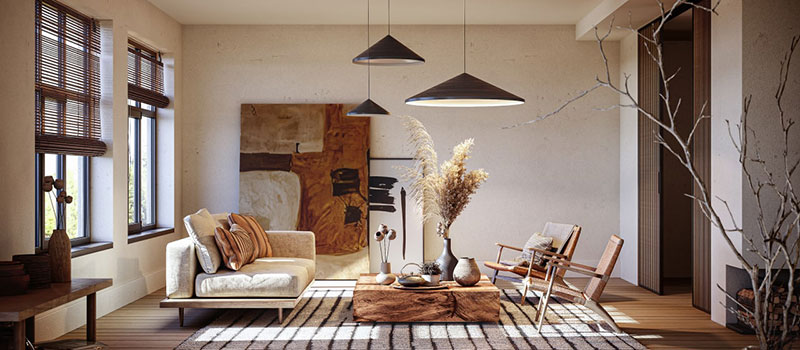
Living room staged with 3D furniture models in 3ds Max

3ds Max staging works with 3D models. The artist rebuilds your room as geometry, places modeled furniture inside it, puts a light source where your window is, and lets the software work out where every shadow falls.

That is the entire difference. Everything below comes out of it.

What The Model Buys You In A Listing

Shadows that agree with the window. When the light is calculated rather than painted, the sofa throws its shadow in the same direction as the coffee table and the lamp. Buyers do not consciously check this. They just feel that something is wrong when it is wrong.

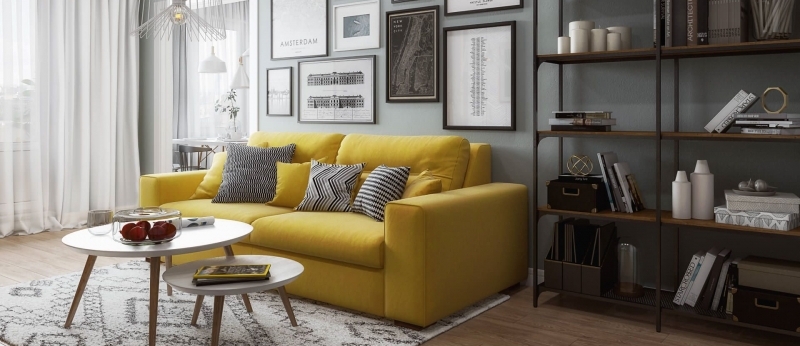
Classic living room render where every shadow follows the window light

A second angle without starting over. The room exists as a model, so the artist moves the camera and renders again. In Photoshop there is no room, only one flat picture, and a different angle means finding every piece of furniture again shot from that exact viewpoint. Usually it means the answer is no.
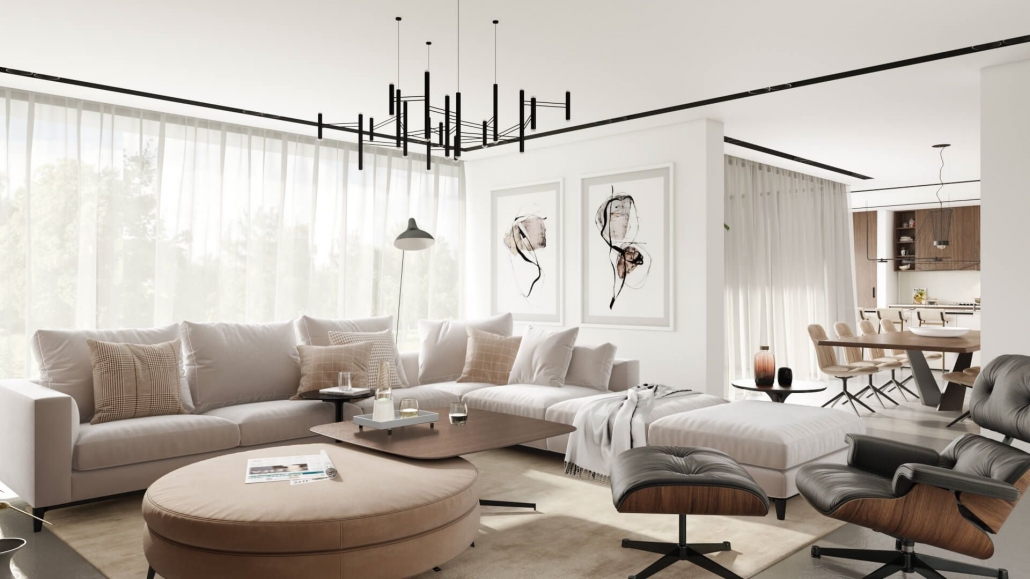
Open plan living area staged in 3ds Max

Proportions you can defend. Furniture models carry real dimensions. A sofa that is 84 inches wide stays 84 inches wide against your walls, so the photo does not quietly oversell how much floor you have.

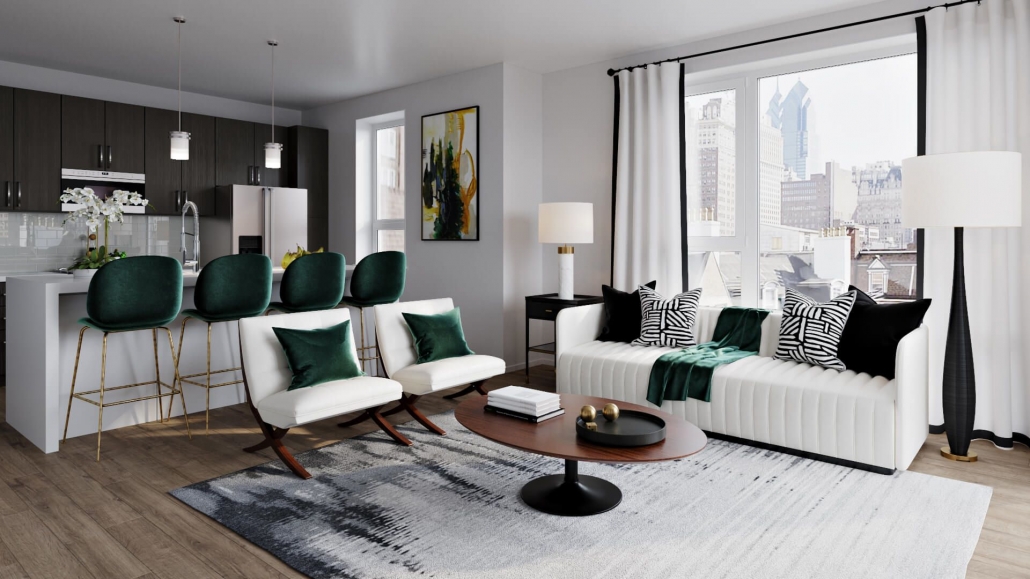
Kitchen render with cabinets and island at true dimensions

Tours, video and sliders from the same scene. Once the room is built, a 360 tour or a walkthrough clip is extra render time rather than a separate project. Here is one rendered from a staging scene, so you can see what a buyer gets to click through.

Revisions that cost an afternoon. Swap the grey sectional for leather, change the rug, drop in a nursery instead of an office. The scene is already there.

  • Before-Virtual Renovation
    After-Virtual Renovation
    Before Virtual Renovation After

Where Photoshop Is Still The Better Tool

Photoshop is not the loser here, it is a different job. When something has to come out of the photo rather than go into it, Photoshop is the right tool and 3D artists use it constantly.
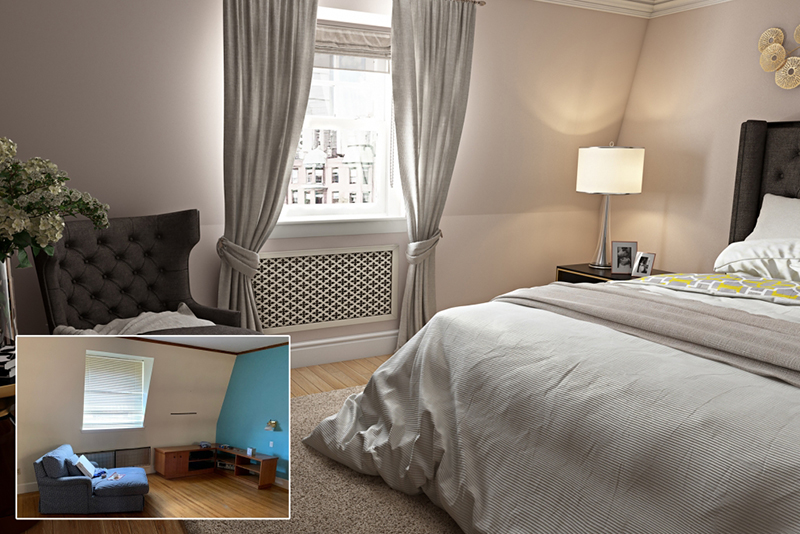
Cluttered bedroom cleared and restaged, with the original photo inset

Removing a stain, a crack, a stray cable. Clearing a cluttered room so it can be staged from scratch. Changing a wall color, fixing a blown-out window, cleaning up the yard. Most staging jobs on a furnished property start in Photoshop and only then move into 3D. If you are weighing the two methods for a specific listing rather than for your whole pipeline, the case by case breakdown lives in virtual staging vs Photoshop.

How To Tell Which One Your Vendor Used

Ask for a second angle of a room they already staged. A studio working in 3D will send it. A cut-out job cannot produce one without redoing everything.
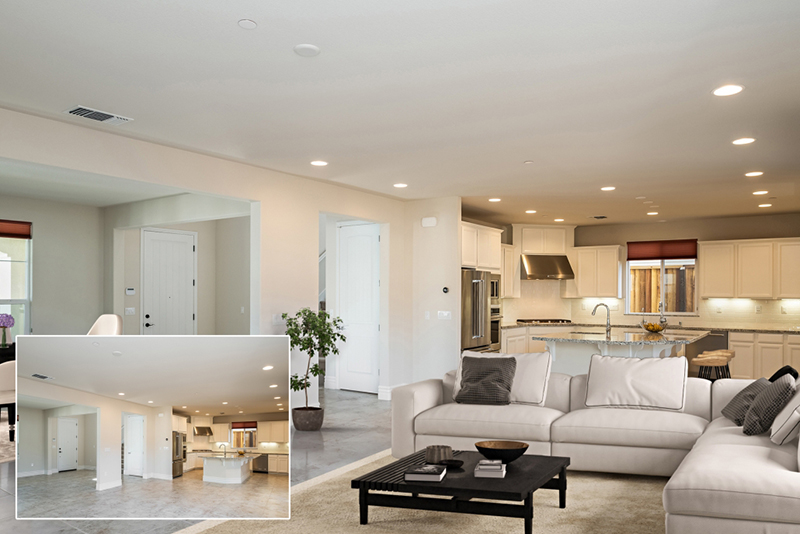
Empty open plan living area staged in 3D, with the original photo inset

Look through their portfolio for the same sofa. Stock furniture photos are a limited pool, and the same three sofas turn up across a dozen listings when someone is working from cut-outs.

Check where the shadows point. Pick any staged photo and follow the shadow of every object back toward the light. If two of them disagree, that shadow was painted.

Look at the glass. Reflections in windows, mirrors and glossy tabletops are the hardest thing to fake by hand, so they are usually just missing.

The Cheap Offer Problem

Photoshop staging is cheap to attempt. The software is common, the machine does not need to be powerful, and basic skill is easy to claim. That combination produces a steady supply of very low quotes.

Classic bedroom staged for a high end listing

Two things happen with those. The images come back flat and slightly off, which is worse for a listing than an honest empty room. Or the portfolio you were shown was never theirs, and you find out after paying.

The fix is not paying more for its own sake. It is asking for one thing before you order.

What To Ask Before You Order

Send the actual photos of the room and ask what they would do with it. A real studio answers with specifics: this window is blowing out, this angle hides the corner, we would need a shot from the doorway.
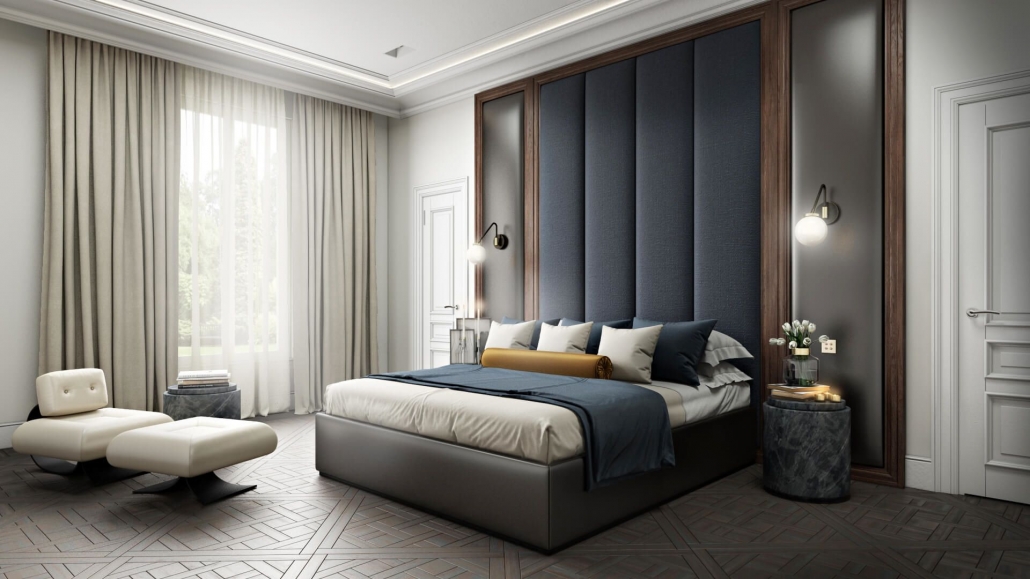
Modern bedroom render delivered to a realtor

Ask what happens if you want a change after delivery, and how many rounds are included. Ask whether they can give you a 360 tour of the same room later. Ask them to send the original photo next to the staged one.

None of these questions require you to know anything about 3ds Max. They just separate the studios that built your room from the ones that pasted furniture onto it.


The software is the vendor’s problem, not yours. What reaches your listing is either a room that was rebuilt or a photo that was pasted on, and the difference shows up the moment you need something more than the one image you were sent.

Got an empty listing and no idea which you have been buying? Send us the photos and we will show you the room furnished. Our virtual staging services start there.

3ds Max Virtual Staging FAQ

Is 3ds Max virtual staging better than Photoshop?

For furnishing an empty room, yes. The furniture is a 3D model in a rebuilt room, so the lighting is calculated instead of painted and you can get a second angle later. For pulling something out of a photo, Photoshop is the better tool and studios use both on the same job.

Does 3ds Max run on Mac?

No. It is Windows only and always has been. Studios on Apple hardware either run Windows on a separate machine or work in different software.

Do I need to know 3ds Max to order virtual staging?

Not at all. You send photos and a note about the style and the buyer you are aiming at. The software matters only because it decides what you can ask for after delivery.

Can 3ds Max staging remove furniture that is already in the room?

Yes, though the removal step usually happens in Photoshop first. The old furniture is cleared, whatever it was covering gets reconstructed, and the empty room is then staged in 3D. It costs a little more than staging a genuinely vacant space.

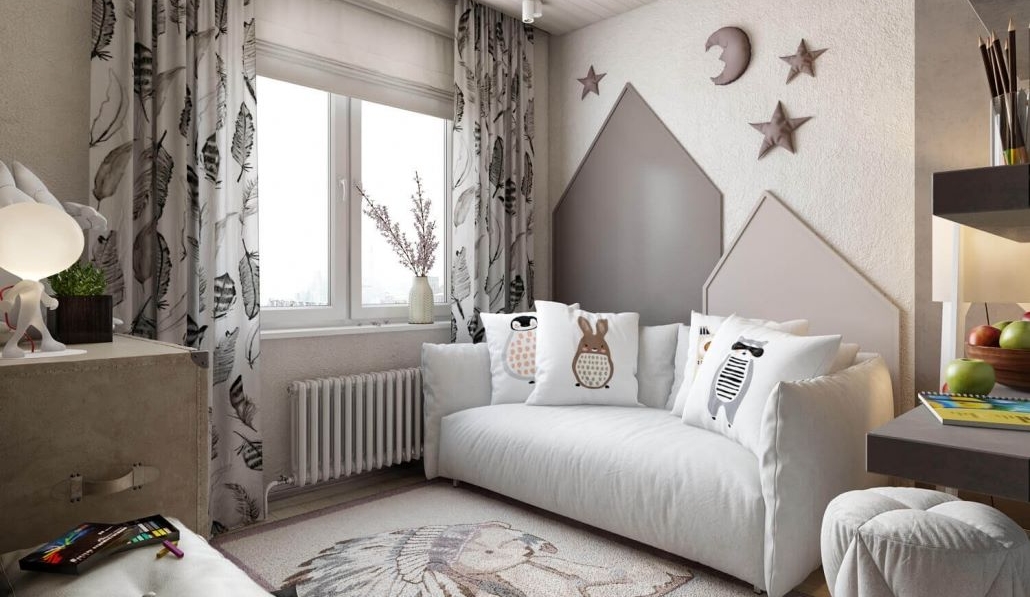
Ask ten agents what 3D home staging is and you get ten slightly different answers. Some picture a floor plan tool. Some picture the thing that drops a sofa into an empty photo. Plenty just say virtual staging and move on.

It is mostly the second one. A CG artist takes photos of a real, empty room and builds furniture, rugs, art and lighting into them, so the finished file reads as a photograph of a furnished home. No truck, no movers, no rental contract.

3D home staging of a living room by ArchiCGI

Below is what the service actually is, what lands in your inbox at the end of it, and the specific spots where it pulls ahead of renting furniture. Also the spot where it does not.

What 3D Home Staging Actually Is

3D home staging, virtual staging, digital staging, CG staging. Same service, four names. The industry never settled on one, so vendors and listing portals use them more or less interchangeably.

The mechanics are simple enough. You send photos of the empty property plus whatever direction you have on style and buyer profile. A 3D artist rebuilds the geometry of the room, places modeled furniture inside it, matches the lighting and the camera angle of your original shot, then renders the result. What comes back is your room, your windows, your floor, with furniture that was never in the building.

3D home staging tailored to the local buyer profile

The specialists doing this get called 3D stagers. Most of them come out of architectural visualization rather than interior design, which is why their work usually gets judged on whether the shadows fall correctly before anyone comments on the cushions.

What You Get: Stills, Tours, Video, Floor Plans

Stills are the bulk of any order. Normally one staged image per room, exported at the size your MLS and your portals want.

After that it depends on the property:

  • 360 tours, built from a rendered model of the space, that buyers spin and zoom on a phone
  • short walkthrough video, mostly for social and email
  • 3D floor plans, which is the same furniture viewed from above with the dimensions labeled

Here is one of those tours, so you can see what a buyer gets to click through.

Not every listing needs all four. A one bedroom rental does fine with three stills. A new build at the top of the local price range usually gets the tour, because that is the buyer who wants to walk the place at midnight from another state.

What Separates A Good 3D Staged Photo From A Bad One

Every 3D stager can put a sofa in a room. The gap between studios shows up in the details that make a viewer stop trusting the photo, and once that trust goes, the listing looks worse than an empty room would have.

Light direction is the first giveaway. If the window is on the left and the sofa casts its shadow to the left as well, the brain flags it before the eye finds the reason. Scale is the second. Furniture gets modeled at real dimensions, so a coffee table that reads as slightly too big usually means the artist guessed the room size instead of measuring against the door frame and the outlets.

Then there is resolution. A render dropped into a photo shot on a full frame camera has to carry the same grain and the same slight softness at the edges of the frame. Studios that skip that step deliver furniture that looks sharper than the walls behind it.

Ask any vendor for the original photo next to the staged one before you order a full set. It takes thirty seconds to see whether the two images agree with each other.

Speed: Days, Not Weeks

Physical staging has a long tail of small tasks. Declutter, deep clean, book the stager, book the truck, agree on a delivery window, wait for the furniture, shoot the rooms, then run the whole thing backwards once the property sells.

3D home staging delivered in two to three days

3D staging needs photos and a brief. Two to three days is the normal turnaround, and studios with capacity will do a rush set in 24 hours. Revisions are the part that really changes: swapping a grey sectional for a leather one is an afternoon of work, not another delivery fee.

The Cost Side

NAR’s 2025 Profile of Home Staging puts the median cost of professional staging at $1,500. When the agent handles staging themselves rather than hiring a company, the median drops to $500. Neither figure includes furniture rental for a vacant home, which is billed monthly, or the movers, who get paid twice.

Cost of 3D home staging compared to physical staging

Virtual staging is priced per image. Three rooms, three images, one invoice. If the property then sits for four months, that invoice does not grow, and that is usually the part agents notice first.

Design Variety Tuned To The Local Buyer

A photo shoot gives you one look per property. Rendering gives you as many as you are willing to order, from the same set of source photos.

Two design options for the same room in 3D home staging

That matters more in some markets than others. A three bedroom in a school district can be staged with a nursery in the small room for young families, and with a desk and shelving for the remote worker crowd, and both versions can run in different ad sets. Same room, two files, no second shoot.

Vacant And As-Is Property

NAR counted 4.06 million existing home sales in 2025, the lowest annual figure since 1995. In a market that thin, a tired property with worn floors and dated cabinets has to work harder for attention than it did five years ago, and most sellers in that position have no appetite for spending money on a house they are trying to leave.

As-is property presented with 3D home staging

This is where rendering earns its keep. Artists can clear a cluttered room digitally, show what the space measures without the previous owner’s belongings in it, and demonstrate a light renovation the buyer could realistically do. The photo stays honest about the layout while showing the potential.

Where The Files End Up

Buyers’ agents in the NAR study rated photos highly important at 73%, video at 48% and virtual tours at 43%. All three of those live online, and everything a 3D stager delivers is already in a web format.

Stills go straight to the MLS and the portals. Tours embed on a listing page or a website. Video gets cut for Reels and for email. Nothing needs a scanner or a re-shoot.

Where Physical Staging Still Wins

The open house. A buyer walks through the door and the rooms are empty, whatever the listing photos showed. Real furniture also tells people how the space feels to stand in, and no render does that.

A realtor saving on the listing budget with 3D home staging

There is also the disclosure question. Virtually staged images have to be labeled as such, and buyers who arrive expecting the photos and find bare walls do not react well. The two approaches solve different halves of the same problem, and the trade-offs are laid out side by side in our breakdown of virtual staging vs real staging.


3D home staging is not a trick for making bad properties look good. It is a faster and cheaper way to show a buyer what a room is for, and in a market with fewer transactions than at any point since the nineties, that is the job the listing photos have to do.

Got a listing sitting empty right now? Send it over and our team will show you what the rooms look like furnished. Check out our virtual staging services to get started.

3D Home Staging FAQ

How much does 3D home staging cost?

It is priced per image rather than per month, so the cost scales with how many rooms you stage. For comparison, NAR’s 2025 report puts the median cost of professional physical staging at $1,500, and that figure sits on top of furniture rental for vacant homes.

How long does 3D home staging take?

Two to three days for a normal set of rooms. Rush orders in 24 hours are common. Revisions usually come back the same day, since nothing physical has to move.

Is 3D home staging the same as virtual staging?

Yes. 3D home staging, virtual staging, digital staging and CG staging all describe the same thing: photorealistic furniture added to photos of a real property.

Can 3D home staging be used on a furnished home?

It can. Artists remove the existing furniture digitally first, then stage the empty room. It costs a little more than staging a genuinely vacant space, because the removal step has to reconstruct whatever the old furniture was hiding.

A Renovated House in the Japandi Interior Design Style

Selling fixer-upper homes is always a challenge for real estate agents and brokers. As-is property is often shabby and outdated — there are cracks in the ceiling, worn-out parquet, stains on the wallpaper, etc. In such cases, agents have to use either physical or virtual interior renovation design to improve the repair. Read more

A Virtually Staged Dining Area in a Modern Home


The Internet made it so easy for realtors and real estate marketers to virtually promote listings and sell properties. All you have to do is take pictures of the house, add text description, post the listing and wait for prospects to call. But it not always goes smoothly. 

Read more

Digital furniture for property: Advantages

Real estate practitioners and photographers are aware that it is impossible just to Photoshop out the brown grass in the backyard or an ugly, old sofa in the living room. In this case, that would be a sort of misrepresentation of the current state. But creating a brand new look against the old one does not lie about the state of the property. It showcases how it could look, had it been ‘beautified’ a bit. And that’s the main purpose of virtual furniture placement. It’s about conveying the true potential of the home, demonstrating its best selling points, and giving the reasons to see it as “the one” for home buyers. Virtual furnituring especially makes sense for vacant houses. 

Read more